“This might be the last time I see you.”
When my long-term client said this for the first time while walking out my incall door, I chuckled. Not because it was a joke; I really didn’t understand what he meant, and when I’m nervous I find the confusion bubbling up through my gullet in a laugh.
“I might not be driving anymore soon,” he elaborated.
Understanding dawned upon me. He meant that he’s going blind—he has been for some time—and because he lives two hours outside of the city I work in, he soon won’t be able to transport himself here.
We went on like this for a year or two. He did stop driving, but his urban medical appointments necessitated that his son drive him in, and for a while he managed to line up our schedules accordingly. I was young, innocent to mortality; I didn’t really believe that one day of not seeing him would stretch into another, until eventually a few years rolled by where he didn’t answer my emails. I couldn’t imagine a reality where someone who had been part of my life for so many years would suddenly dissolve firmly into my past and become more memory than bed partner.
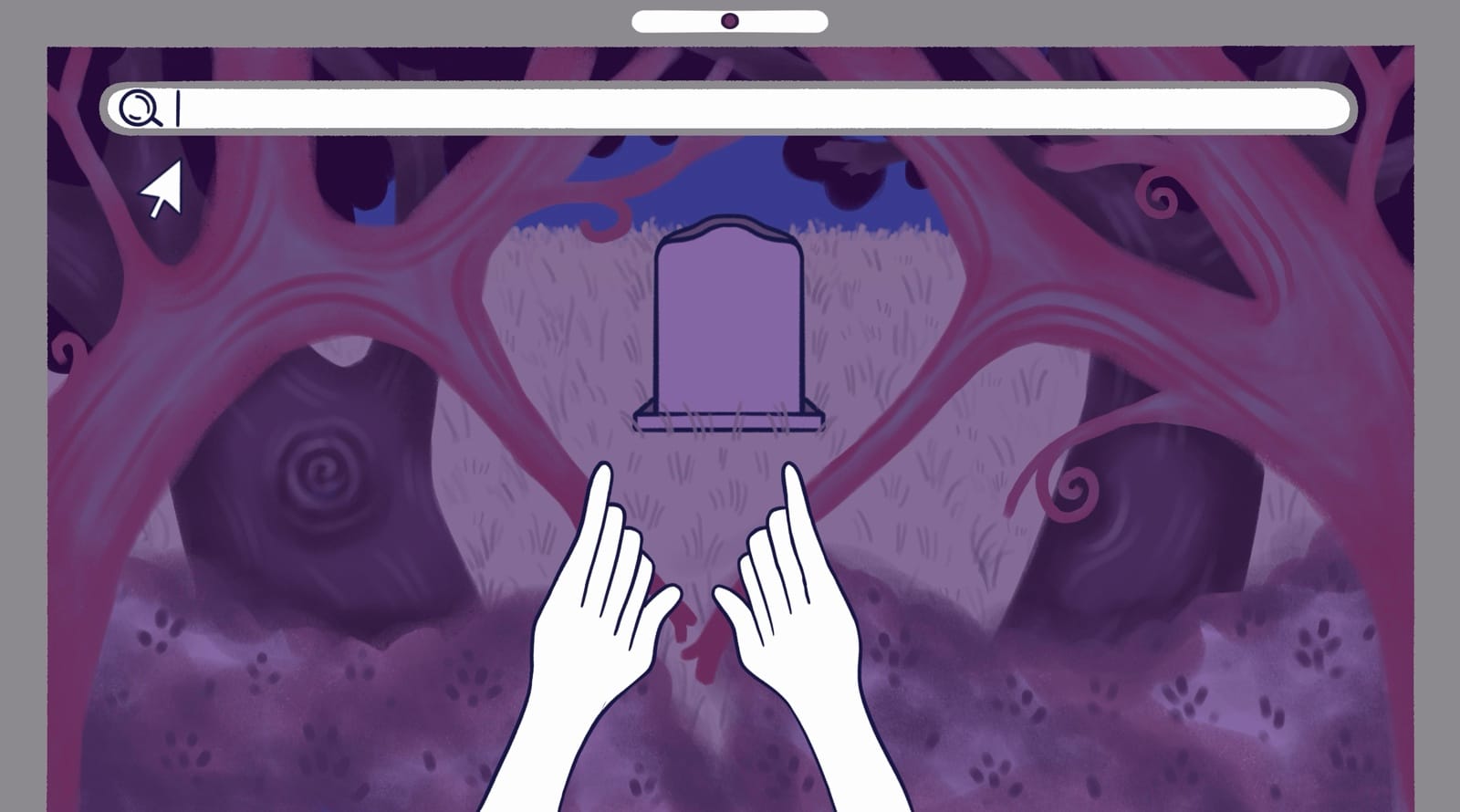
Every once in a while, I google his name and scan obituaries, but really I don’t want to find out like that. But if I don’t find out like that, I’ll likely never find out at all. I’m not a wife, a mistress, a colleague, or a Facebook friend. I don’t even know if I’m a contact in his phone. I will never verbalize condolences to his family or attend a funeral. To the bereaved, I am no one, I am nothing. Now I realize, as I age, as my clients age, one day we will all die, and there will be no memorialization of what we meant to each other.
I couldn’t imagine a reality where someone who had been part of my life for so many years would suddenly dissolve firmly into my past...
This is not the first client I’ve had disappear into the ether. I remember when my first long-term regular was diagnosed with fourth-stage cancer. He’d hardly gotten over the first round of cancer when he threw a plate of spaghetti and meatballs against the hospital wall—his first meal after having a testicle removed. When he got the second diagnosis, he dropped everything and went on an international healing journey. After a year and a half of radio silence, wherein I assumed he had died, he showed up in my new city to take me for a beer. I remember the emotions rising up in me like lava: yes, I was glad to see him, but I was also brimming with grief. I thought he’d died. Why hadn’t he told me he was okay?!
Again, I was young, in my late twenties. My feelings must have exceeded the limited container of our relationship; he never contacted me again after that day. A different kind of permanent ending, with its own accompanying grief and heartache.
No one told me when I entered this industry that I would accompany so many towards death. I suppose this is true of any path in life to some extent—we will all die, and no one really tells you what this will mean when it starts happening. But at the same time, grief is processed through ritual (yes, there are studies that back this up). And as much as clients may love their hookers, we are almost never invited to the rituals. We’re just left knocking on a door that will never open again, knocking and knocking until we decide it’s time to walk away.
No one told me when I entered this industry that I would accompany so many towards death.
This particular man, the one who was going blind, was uniquely important to me. Years earlier when we’d first met—when I was a baby hooker—he crossed a line. He touched me in a way I didn’t like, and after the session I informed him of this over email. He is the only—the ONLY—client in my ten years who, when alerted to a violation, apologized and changed his behaviour. There was no ego, no gaslighting, no defensiveness. He listened and adjusted, and we were better for it. I respect him for that; I love him for that.
Lately, I’ve been thinking of stone carving. Carving is a subtractive process: you start with a big ol’ brick, and carve it away until you’re left with the shape you want. If you make a mistake, you can’t go back and change it: you have to just keep carving more away until you find a new right shape. This is how “we” felt to me: we kept carving together, finding our way forward.
The loss itself—his potential death, the potential and inevitable death of all my clients, all my lovers, myself and everyone I’ve known—also makes me think of stone carving, but in a different way. I think of how mountains are shaped over time, eroded by rolling water and animal footpaths, and glaciers dragging their feet. It’s also subtractive. The loss over time—the matter eroded away—is what shapes the mountain now. Every footstep, every rainfall, every rolling tear, takes a little bit away with it. It’s the loss that carves out the life. We just need to find a way to name it and honour it.
For more on this subject, see our articles Death and Sex (Work) and Use My Shoulder: Sex Work, Deathcare and Grief.
Are you a sex worker with a story, opinion, news, or tips to share? We'd love to hear from you!
We started the tryst.link sex worker blog to help amplify those who aren't handed the mic and bring attention to the issues ya'll care about the most. Got a tale to tell? 👇☂️✨