
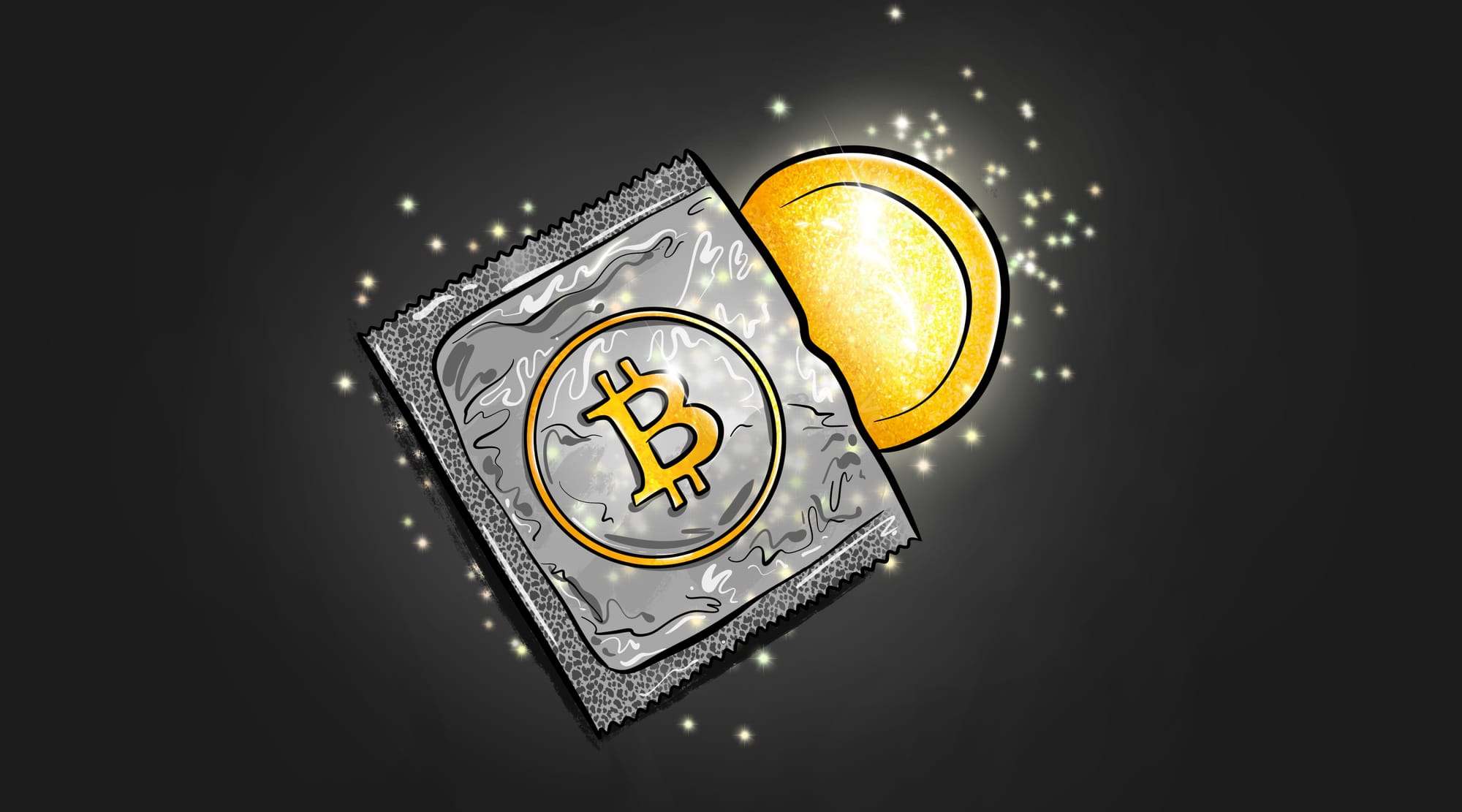
In my last article, I explained why using privacy-preserving cryptocurrency can be a game-changer for sex workers. My approach is to treat crypto as a foreign currency I can use rather than a new technology. Using it this way dramatically increases both my financial safety, and my client’s privacy. In this article, I’ll share more about exactly how I use it today, so you can decide if it can enhance your business too. Read on for my suggestions.
Stick to privacy-preserving cryptocurrencies!
Not all cryptocurrencies are the same. Likewise, not all crypto "wallet" apps are the same. Knowing which ones to use and which to avoid can be the key to financial superpowers. Contrary to popular belief, many well-known cryptocurrencies like Bitcoin and Ethereum offer limited built-in privacy protections. Private currencies, broadly known as privacy coins, offer protections that we as sex workers need. I use a privacy-preserving cryptocurrency called shielded Zcash to restore the privacy inherently offered by physical cash.
Use self-custodial wallets for sex work
I use only self-custodial (or non-custodial) wallet apps for sex work, not crypto exchange accounts! You can swap (or convert, trade, or exchange) non-private cryptocurrencies into their private or "shielded" counterparts. However, I suggest doing so using specific apps called self-custodial or non-custodial wallets, if you are to keep your privacy (I use Zodl, an app for using shielded Zcash.)
It makes sense for sex workers to strictly limit our cryptocurrency activity for work to privacy coins—such as shielded Zcash and self-custodial wallet apps like Zodl—and clients who want to take payment discretion seriously can also do so.
This way, no one except the people we do business with can see that we're getting paid, or by whom, how much, or for what.
Why “custody” in crypto matters to safety
The concept of custody in cryptocurrency refers to who's holding your money. Either you do (self-custody or non-custodial), or someone else does, called third-party custody. Unfortunately, both types of crypto apps will call themselves “wallets.”
Anyone impacted by financial discrimination already knows that it's not safe to let someone else hold our money.
Self-custody apps, meaning the ones where we hold our own money, work like real wallets. These apps don't ask you to open an “account,” because they don’t need one to work. That’s also why they don't need to know your name (or even a username), and they don’t need your email, phone number, or other personal information to work. They also let you spend however much money you have immediately, without needing approval from a bank or payment processor.
Avoid custodial services and their third-party apps
Third-party custodial apps are nothing like that. Instead, they work like ATM machines on your phone. Third-party apps force you to sign up with your government name, require legal documentation to prove your identity, and keep your money away from your control, returning it to you only when you ask.
Using those types of apps for sex work can be dangerous because they once again subject you to all the same risks associated with traditional bank accounts.
Examples of third-party custodial apps are Coinbase, Gemini, Binance, Swyftx, CoinSpot, CashApp, PayPal, and Venmo. I avoid using these myself. That said, your clients can still use the crypto functions in those apps to pay you after you set up a deposit address for them.
Getting paid in crypto
The easiest way for many of us to get crypto is to just have a client or customer pay us directly in that currency. It's even better if they use a privacy coin, but in my experience only the most savvy clients do this.
Receiving the same cryptocurrency that a client wants to send is as easy as tapping the "Receive" button in your wallet app. Doing so will present you with the option to reveal your full deposit address and ways to share it, such as a QR code of that address or a link. When you share this address with your client they usually just need to tap the "Send" or "Withdraw" button in their wallet app, paste or scan the deposit address you shared, and possibly enter an amount to pay (if that wasn’t already sent with the QR code). There's actually less to type than when paying via credit card on a shopping cart’s checkout screen.
Unfortunately, most clients don't yet know (or care) about privacy coins. This means they may not yet have been introduced to them.
Swap deposits let you accept hundreds of currencies, privately
Fortunately, some apps make it possible to receive one private currency even if your client or customer sends you another non-private currency. To do this, I perform what's known as a swap deposit. A swap deposit is exactly what it sounds like: a currency swap and deposit payment in one fell swoop.
Swap deposits are made possible by services called decentralized exchanges, or DEXs. These act like a currency exchange counter in an airport. They let you convert, say, your dollars for British Pounds or Indian Rupees or, in my case, a client’s Bitcoin for shielded Zcash.
To turn what the exchange expects to be a plain currency "swap" into a cross-currency "payment," I use the swap features built into Zodl to set up the trade in a specific way myself, but then have my client fulfil it.
The currency exchange at which I set up the swap always asks me for a "refund" address. They want this address on file to ensure any deposited Bitcoin can be returned to its rightful owner in case the currency swap fails. Ordinarily, this would be my client’s address, but if I use one of my own Bitcoin addresses as the swap’s "refund" destination instead, I can ensure I’ll get paid regardless of whether the swap is successful or fails.
This makes swap deposits really powerful and ensures I receive a client's payment (without the possibility of chargebacks) regardless of market conditions or technical failures. Moreover, I can accept whatever cryptocurrency my client wants to send.
Should a client ever ask, "Do you accept Melania coin?" I can honestly reply, "Yes, darling, I do!"
A swap deposit is a slightly more advanced technique, but it’s extremely useful for clients who won’t obtain privacy-preserving cryptocurrency for themselves, and I never need to reveal my own crypto address.
Paying in foreign (crypto)currencies
What if the vendor you want to pay doesn't accept alternative privacy-preserving cryptocurrency? A good example is Tryst, which only accepts Bitcoin. To pay Tryst in Bitcoin for my membership, I make a cross-currency payment using the “Crosspay” feature in my Zodl app, which is simple. Paying this way keeps the source of my funds for Tryst credits private.
And what about the café that only accepts "major credit cards"? For these situations, I use a second self-custodial wallet app called Payy (with two y’s), which offers a reloadable debit card. The card is connected to the Payy wallet’s balance, rather than a bank account, or a line of credit. This obviates the need for a bank account and is perfect for those of us who have been de-banked, but still have a legal government ID.
Getting this digital Visa card is the one time you'll need to provide your legal documentation to the app, because Visa requires it. While buying things with this card informs Visa of those payments, I can still "shield" the source of my money by loading my Payy card using privacy-preserving cryptocurrency and apps.
Go explore crypto!
As you explore cryptocurrency options for your business, remember to stick with privacy coins and self-custodial wallet apps. And if you’re a client, I hope you’ll ask your provider if they accept crypto, and point them at these articles if they’re new to it!
I often discuss financial privacy and self-sovereignty issues on my Bluesky, and there is a community of other sex workers who will help you, too. Please reach out!
A Note to Our Community: The information in this article is general information and opinion only. It is not financial, investment, tax or legal advice, and it is not a recommendation to buy, sell or hold any cryptocurrency or other asset. Nothing here takes account of your personal circumstances.
Laws vary significantly by country and jurisdiction. If your work or financial activities may carry legal risk where you are, do your own checks, consult a legal professional if it's safe for you to do so, and always move in ways that protect you. To the extent permitted by law, we accept no responsibility for any loss arising from reliance on this article.
The Tryst.link blog is not affiliated with or endorsing any sites, brands, or products linked here. We share resources only where we feel they might add real value to sex workers’ knowledge or autonomy—and when the benefit feels worth the risk. This industry isn’t built to protect sex workers, and not every platform has good intentions. Harm reduction isn’t blind trust. Ask who owns it, who it serves, and whether the info is current. Do your own checks and move in ways that protect you.
For more on crypto, see Violet Rollergirl's article Why I'm Telling All Sex Workers To Use Crypto and for info on paying for Tryst credits with bitcoin, see Ask Ada: What’s the Best Way to Pay for TLC with Bitcoin?
Are you a sex worker with a story, opinion, news, or tips to share? We'd love to hear from you!
We started the tryst.link sex worker blog to help amplify those who aren't handed the mic and bring attention to the issues ya'll care about the most. Got a tale to tell? 👇☂️✨