
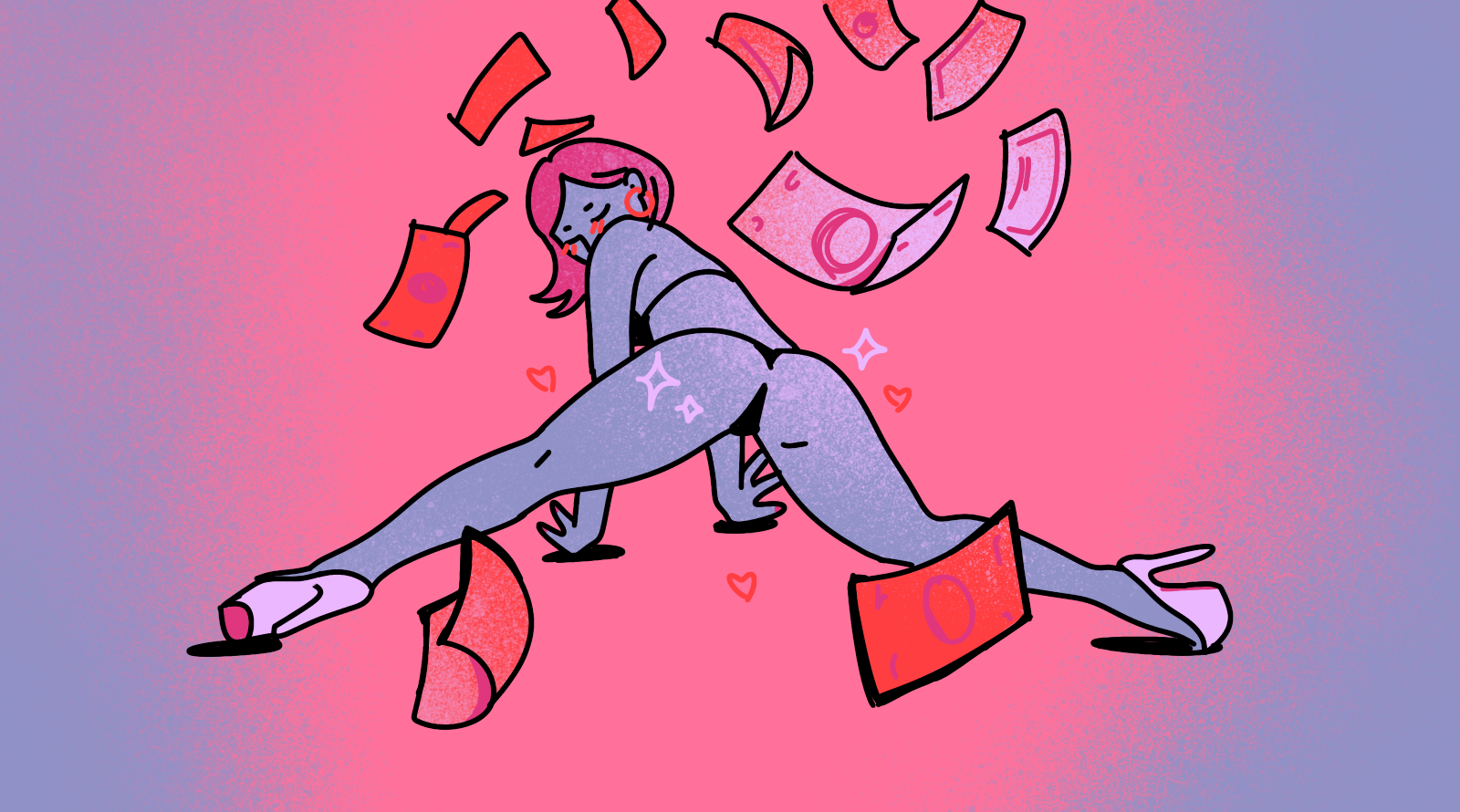
It’s fashion week in Berlin and invitations to a show combining fashion design and pole dance are popping up on my Instagram. The event description is crafted with intriguing concepts: fashion designers collaborating with pole dancers to dissolve boundaries between disciplines, “reimagining space and bodies”. The organizers mention self-expression, and community, and list the usual empty buzzwords that mean everything and nothing but are good for marketing. At the end of the description is the price for this experience—twenty-five euros for a ticket. What is not included in the promotional material is this detail: the six dancers are not being paid for their performances.
I was outraged when I found out, but certainly not surprised. This type of unpaid opportunity, luring performers with the promise of exposure, is very common in show business.
It was seven years ago when I started performing outside of the strip club, taking the first steps into artistic spaces, techno clubs, kinky parties, festivals, and cabarets. I had no professional dance background. I learnt pole dance from my colleagues during the long nights spent in an empty, struggling strip club in the German capital. I would arrive early, before the shift started, and try tricks I had seen online, while the bartenders chopped limes. I would wait for a weekday when no clients walked in to make use of the stage, and ask my older colleagues to show me new moves or correct my old ones.
What is not included in the promotional material is this detail: the six dancers are not being paid for their performances.
I was determined to become a showgirl. I felt a need to express myself and to channel creativity into my performance—things I couldn't really do in the traditional, heteronormative, and conservative strip clubs where I had been working. At the same time, I was sick and tired of the exploitative working conditions I had found myself in, and I wished to find spaces where I could dance and make money under better conditions. In this sense, many sex workers embark on a very similar journey as mine. Thanks to its flexible schedules, sex work is a field that attracts a lot of creatives, who choose this path to have enough spare time to focus on their artistic endeavors.
Young me was not only determined—she was also naive. After seven years in show business, I can say that it can be as exploitative as sex work establishments if we are talking about working conditions. I may have encountered creative freedom in the performance space, but have also experienced a shameless injustice that has made me feel like a piece of meat used to feed someone else’s project—or someone else’s ego. Despite this, show business is not nearly as stigmatized and demonized as sex work, and this says a lot about the society we live in.
The topic of abusive men in the business deserves a whole separate book. I have denounced this type of man and people’s inaction throughout my writings about sex work. I recognize that abuse in show business presents deeper layers of intricacies. For one, a performer’s financial needs. Sadly, I have learnt that our boundaries change depending on how much we need the money. Right now, I am able to refuse to work for abusive men because I have food on my table and I can pay my rent. Yet, I don’t exclude the fact that I’d compromise my boundaries if I had no other choice. There is no easy solution to this issue, but what surely helps is calling these men out whenever we are in the position to do so, inviting the public to boycott them, and building a community to support each other and fight these abuses on a united front.
After seven years in show business, I can say that it can be as exploitative as sex work establishments...
On a lighter note, I find myself chuckling when I think back to some of the unrealistic expectations I have received as a pole dancer. Many show producers forget we have physical limits as all humans do—maybe we don’t make it look like we do? I am laughing about it now, but I definitely wasn’t laughing the time I had to perform for five hours at a fashion event and my toes were bleeding. Or the time I discovered that the festival that hired me for a whole day of performances and panel appearances hadn’t planned to provide me with any food. Often, the bookers demanding so much are also offering the lowest payments, making the situation even more exploitative. Receiving a fair rate as a performer is a challenge.
Throughout this global financial crisis I have witnessed a considerable decrease in the rates performers are being offered. In Berlin, for example, I used to earn an average of 200-300€ per show, but nowadays I rarely get offered more than 100-150€. I understand that producing a show in this economy and selling tickets to cover the costs is twice as hard as it used to be. I also believe some adjustments can be made to ensure a fairer pay for everybody. As a show producer myself, I always advocate for quality over quantity. If the budget is not enough for a lot of performers, for example, there is always the possibility of having fewer performers and paying them better. Too often I see events saturated with performers, none of them compensated fairly.
Everything has become more expensive, from groceries, to my rent, to my outfits, transportation, and health insurance. The government has increased the minimum wage to allow employees to continue to afford a living, yet somehow the money I am offered in exchange for my labour as an independent contractor is less. How can this be sustainable for us artists?
And the ‘cherry on top’ of all this is that some show organizers have solved the problem of saving on costs by not paying the performers at all. Instead they offer just the “currency of exposure”. This has nothing to do with the current financial crisis because these manipulators have been around since the birth of time.
Some show organizers have solved the problem of saving on costs by not paying the performers at all. Instead they offer just the “currency of exposure”.
What a lot of performers are not aware of is that the exposure they are promised is a myth. In my experience, receiving exposure for your performance is not automatic, as certain factors need to be in play to make you stand out as an individual. You don’t receive exposure just by being on a stage. Most of the time, your performance gets lost in the bigger picture because of the overflow of input the audience receives during a show. In practical terms, it’s hard to get potential audience members to notice you and to give you other opportunities if you are not given the spotlight.
In many cases, the performance is the background for something else. Let’s take the fashion show I mentioned earlier: it wasn’t really about the pole dancers. A way to have given the dancers real exposure would have been to have, say, little interviews and proper introductions both on social media and during the show. Yet, the performers were just a list of tags at the end of a long Instagram post describing the event. How is that going to give them exposure? In this context, the unpaid performer becomes a mere object at the service of the production.
A colleague of mine had received an invitation to perform for that same fashion show. “As if they could hire a stripper for free,” was her response.
Sex workers seem to have stronger boundaries and good training when it comes to setting a price for our labour. I can’t say the same about non-sex workers, and this is ruining the market for everyone. As long as they can keep finding people prepared to perform for free, show organizers will continue their exploitation. So this is my plea to all my fellow performers: know your worth, especially when it comes to sexualized labour. In pole dancing and performance: anywhere you are exposing your half-naked bodies and risking injury at the same time; even if you see your performance as art and sport, “show business” will inevitably sexualize you. On top of that, things like training, props, and costumes come from our own pockets. Performing for free for a friend or for charity is another story, but let’s not fall for this “myth of exposure” when it comes to commercial events. It takes all of us refusing to offer our sexualized labour for free to push exploitative show organizers into paying everyone what we deserve.
For more on myths and misconceptions around sex work, see STIs: Myths, Stigma and Safer Sex and Double Standards, Sex Work and the Myth of the Cool Girlfriend.
Are you a sex worker with a story, opinion, news, or tips to share? We'd love to hear from you!
We started the tryst.link sex worker blog to help amplify those who aren't handed the mic and bring attention to the issues ya'll care about the most. Got a tale to tell? 👇☂️✨


)
