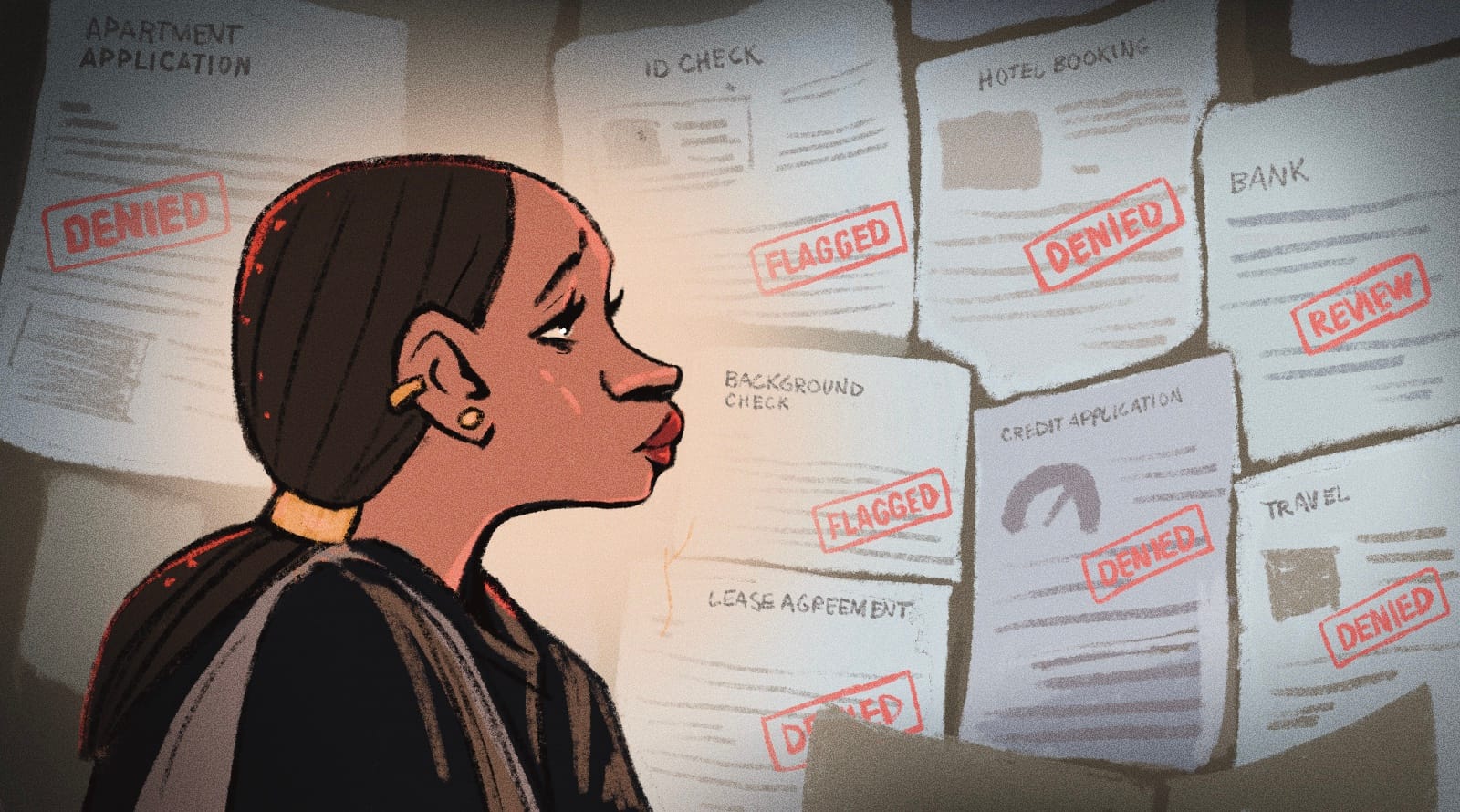

There’s a unique kind of fear behind being seen as a representative. It’s not something you sign up for, but it follows you the moment you open up, especially in sex work. Suddenly, you’re not just a person doing your job, you become a spokesperson, a symbol, a living think piece. People look to you for the ‘truth’ about sex work, as if one person could ever represent an entire, fragmented, complicated community. You’re expected to speak perfectly, to educate gently, to be the ‘good’ kind of sex worker who challenges stereotypes but never makes anyone uncomfortable. There’s no space for differences between an online content creator, a full-service worker, a stripper, a cam model, a sugar baby, or someone who’s done survival work.
The industry is vast and varied, shaped by class, race, gender, access, and geography, yet outsiders often want one tidy explanation that makes them feel they understand. You can try to explain those distinctions, but often it feels like shouting into the void. People hear what fits their preconceived ideas, and you’re left wondering if you’re doing enough to correct the narrative or if you’re just reinforcing another one. It’s a role that leaves little room for imperfection, anger, or confusion, and it’s suffocating. Every word you say feels loaded. You worry about saying the wrong thing, about being the reason someone judges sex workers more harshly, or worse, being the reason another sex worker faces stigma or harm.
Suddenly, you’re not just a person doing your job, you become a spokesperson, a symbol, a living think piece.
It’s not just your own reputation you’re protecting, but the perceived legitimacy of your entire community. You must deal with the pressure to perform the ‘right’ kind of sex work (empowered, articulate, trauma-free) that erases the messiness of real experience. Not every sex worker feels powerful all the time. Not every story fits into a neat narrative of liberation or victimhood. Sometimes it’s just work, sometimes it’s survival, sometimes it’s both. The truth is complicated, and so are the people living it. The world often doesn’t allow sex workers that complexity, and being forced to carry that contradiction alone can be one of the heaviest parts of the job.
The mainstream narratives rely on the extreme: the abused (white) sex trafficking victim with no agency, or the hyper empowered, perfect, boundary setting sex worker who never experiences coercion, exploitation, violence, or doubt. People are uncomfortable with the idea that sex can be both labor and emotionally complicated. They want sex work to be “empowering feminist labor” or “tragic exploitation,” and anything else is too complicated. But many workers fall somewhere in between these extremes, navigating a mix of agency and constraint that varies across time, situation, and personal circumstance. It is a spectrum that is constantly shifting; some enter the industry by choice, some through constrained choices, some through lack of choice, and many through a combination of these factors over time. One can feel different things towards sex work at different moments: one day in control, another day exhausted, another day indifferent, another day proud. A single person’s relationship to sex work changes over time. Mine certainly did.
I’ve lived in the grey areas of sex work, made even more complex by my mother’s own experience and relationship with sex work and stripping. Our feelings and experiences overlap and diverge in ways that are complicated. Her experiences don’t feel like they are mine to explain, but they have shaped me, shaped both of us, and touched us differently. Somehow, I’m supposed to package all of that into something clean and coherent every time I speak on the subject. I’m expected to reopen old wounds to make a political point. The burden to explain, contextualize, and justify never ends.
They want sex work to be “empowering feminist labor” or “tragic exploitation,” and anything else is too complicated.
Having to clarify the difference between consensual work and trafficking over and over, to remind people that sex workers deserve labor protections, that bodily autonomy includes the right to exchange sex for money. Having to explain basic human empathy. To explain that sex workers are parents, students, caregivers, immigrants, disabled people, queer people, artists, survivors and everything in between. All this, with the awareness that no matter how carefully you speak, someone can–and will–twist your story for their own moral agenda. It’s a constant balancing act. How do I speak honestly without contributing harm? How do I advocate without pretending to be a spokesperson? How do I acknowledge my own pain without letting someone else weaponize it against people who had different experiences? It’s a lot. It’s often too much, honestly. And if you’ve ever felt overwhelmed by that pressure, I promise you’re not alone.
One of the first truths sex worker advocates must accept is also the hardest: you are not, and cannot be, the perfect representative for sex work. Stop expecting yourself to represent everyone. You literally can’t. No one can. Or should! No community or movement with this much diversity can be distilled or explained by a single person. Sex worker advocates often become educators by default, and that emotional labor is draining. It is ok, necessary even, to rest. Activism that relies on self-sacrifice is not sustainable. You do not owe every stranger, journalist, teacher, well meaning friend, or curious acquaintance a full education. Boundaries are essential, a tool, not an obstacle.
Sex workers carry an unfair burden: society’s projections. Everything from fetishization to political agendas to the tragic victim narrative will be put onto you. And when you step into activism, these projections intensify. They want a person who is articulate enough to educate them, clean enough to be palatable, calm enough to feel approachable, cool enough to feel authentic, and strong enough to carry every stigma without breaking. They want you to have the right amount of trauma, a sad story–but not one that makes them uncomfortable. Someone empowered, but not too confident or proud. Someone who can speak without glamorizing exploitation. Some want you to be sanitized and smiling, others want you broken and tragic. All of it is just different forms of dehumanization. No one can fit this mold. It’s impossible, and yet many of us feel obligated to try.
You do not owe every stranger, journalist, teacher, well meaning friend, or curious acquaintance a full education.
It is unsurprising that society stigmatizes sex work. We grow up surrounded by moral judgment, criminalization, and media portrayals that flatten the complexity of sex workers’ lives. But what’s often ignored is the stigma that comes from within the sex work community itself: infighting and policing who counts as a ‘real’ sex worker; hierarchies between full service work, stripping, and online work; resentment towards those that have left speaking out; defensiveness towards people with negative outlooks due to their own experience; fighting about what narrative is ‘acceptable’ for activism. These fractures exist because the community is trying to survive in a world that hates sex work. When you’re constantly fighting stereotypes, you become intensely protective of how the community is perceived. But internal divisions make advocacy even harder, because now you’re balancing not only society’s expectations but also the expectations of people who understand the work firsthand.
Many advocates have complicated histories with sex work: those who entered because of survival needs, trauma, coercion, or lack of options; those who have left; those whose family members worked in the industry; those who love sex workers deeply. This creates an additional layer of doubt: Do I have the right to speak? Am I allowed to be an advocate if my relationship to sex work is complicated or painful?
The answer is yes. There is no ‘right’ background for advocacy. Fighting the pressure to be the ‘perfect’ activist in sex work advocacy starts with recognizing that perfection was never the point; liberation is. None of us can hold the entire movement on our shoulders, and none of us are meant to. What is possible, and what actually builds change, is embracing the diversity within our community instead of apologizing for it. Challenge the myth that there is a right or wrong kind of activist. Make space for each other’s stories. And most importantly, remember that advocacy is a collective effort, built on many voices speaking from many experiences.
To read more from Elainie, see The Crushing Irony of the SWERF Academic and The Aestheticization of OnlyFans: When Liberation Becomes Branding.
Are you a sex worker with a story, opinion, news, or tips to share? We'd love to hear from you!
We started the tryst.link sex worker blog to help amplify those who aren't handed the mic and bring attention to the issues ya'll care about the most. Got a tale to tell? 👇☂️✨