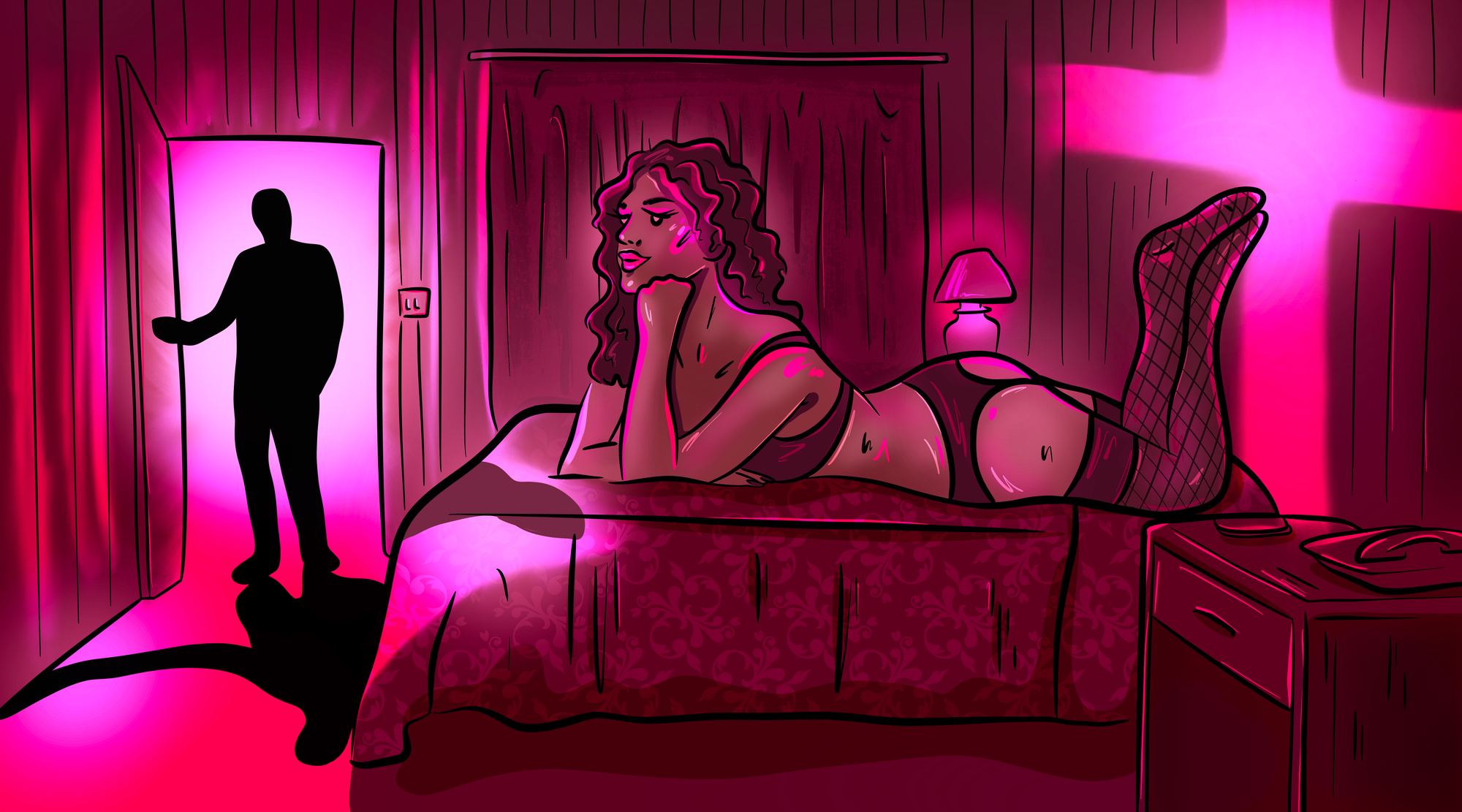
I’m dressed in black latex and reclining in a lounge chair next to my client, where we begin to negotiate the session. He’s interested in CBT (an acronym for cock-and-ball torture, not to be confused with the form of psychotherapy), rubber, and interrogation role-play.
“No ball-kicking,” he says.
“Noted. When it comes to balls, how do you feel about squeezing, slapping, pinching…”
“Squeezing, slapping, pinching–all good.” He laughs. “If you were to take those lines out of context, we would really sound insane.”
Indeed to some, this would sound insane. But sex is bizarre. There’s always something about what we do in bed (or in the dungeon, or wherever) that doesn’t quite seem normal–there really is no ‘normal’ sex. What first intrigued me about BDSM and the kink scene was exactly this: being able to question what is normal, to explore strange and intense sensations, and find your own way of negotiating consensual encounters based on what communication style works for you.
Having certain needs for sensory stimulation and direct communication styles are both common autistic features that BDSM and kink culture accommodate well. When studies described the correlation between neurodivergence and an interest in BDSM, it didn’t come as a surprise to many of us in the scene.
The neurodiversity movement, which began in the 1990s, brings new perspectives to research on autism and ADHD, emphasizing how neurodivergent people have a different way of functioning rather than a disease that needs to be cured. This has led to the re-thinking of many preconceptions associated with autism where we instead view autistic people as having particular needs and strengths which can be better accommodated by society.
While the neurodiversity movement has achieved some success in reducing stigma, there is still a significant amount of fear-mongering about autism which has intensified recently in the U.S. political climate. To address common misconceptions about autism, and in particular autism’s relation to kink, I’m sharing recent research from the field, as well as ideas informed by my work as a professional dominatrix.
Having certain needs for sensory stimulation and direct communication styles are both common autistic features that BDSM and kink culture accommodate well.
Autism is associated with differences in perception and access to language, increased sensory sensitivity, and challenges reading implicit social norms. Contrary to common beliefs about autism among the public, many autistic people are able to function well enough to engage deeply in fulfilling work and relationships, and may excel in some skill areas due to intense focus and dedication to special interests. As public awareness has increased, autistic people (especially women) are frequently being diagnosed later in life. This rise in awareness is often closely correlated with the rise of internet culture, which created spaces for autistic people to find each other and organize.
In roughly the same timeframe that the neurodiversity movement formed, online BDSM communities and networks began to emerge and come together. While sexual sadomasochism was nothing new, these online forums and the scenes that they connected became spaces for sharing ideas. They formed a common language around niche sexual interests, as well as structures for meeting and playing with partners in dynamics rooted in consent and mutual respect.
The connection between an interest in BDSM and autism was often described in the past by researchers in terms of deviance, emphasizing the abnormal, and usually with the assumption that BDSM is a violent or harmful practice. This likely stems from common misconceptions about BDSM and what it is that we do as players. BDSM isn’t just about doing something extreme and painful and it’s not just about controlling someone else for your own gratification. BDSM is about the way that you play with another person and how that allows for an exploration of fantasy in a dynamic built on trust. It’s about rhythm and structure, building tension and arousal, and an exchange of power which is always fluid and evolving.
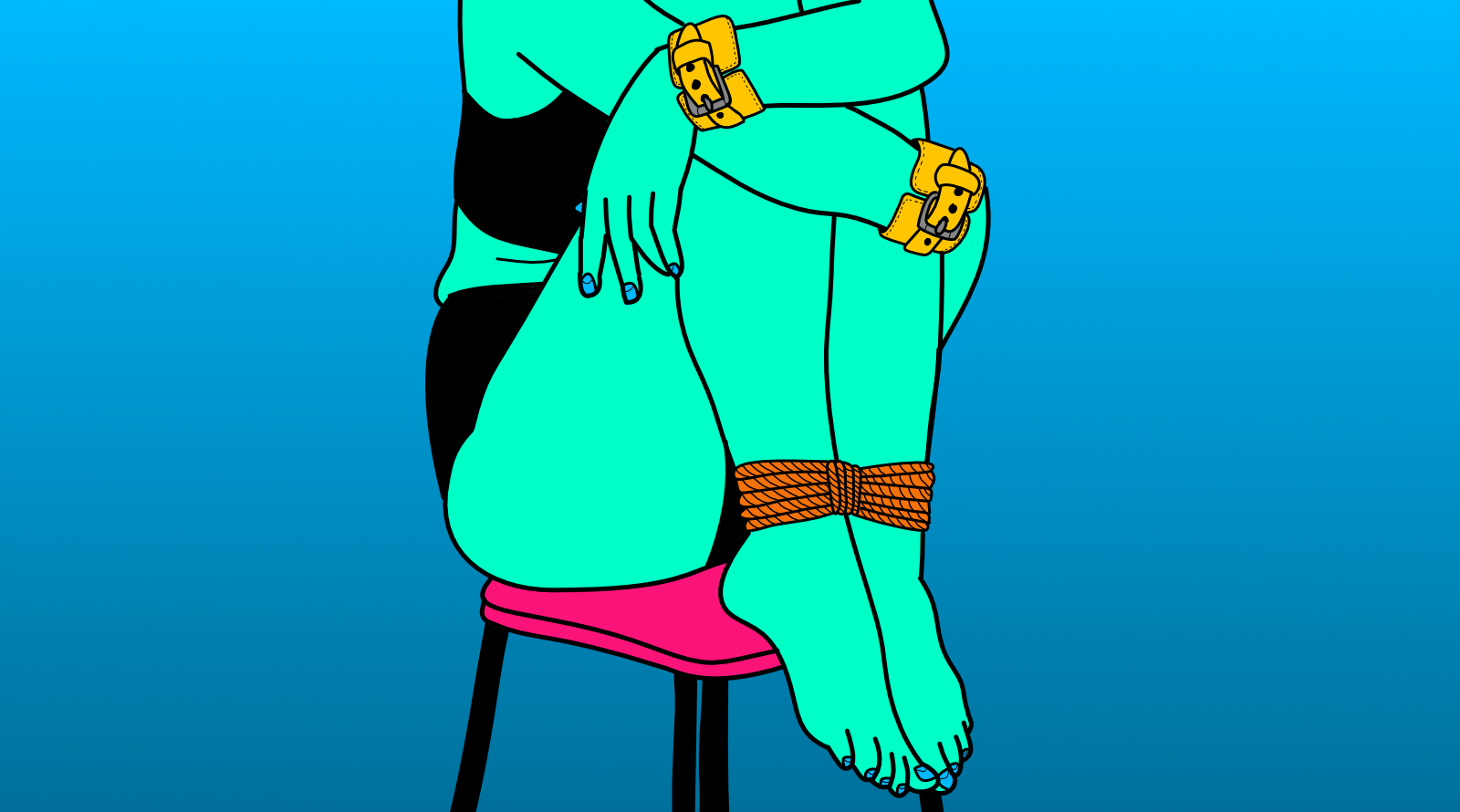
From blindfolds to latex vacuum beds, many of the activities popular in BDSM involve over or understimulation of the body. The tight hug of a latex catsuit might have something in common with the comforting pressure of Temple Grandin’s famous livestock squeeze machine, which she designed based on her own experiences of using pressure on the body to relieve anxiety associated with autism. Experiencing total sensory deprivation during a scene, or sharp pain and overstimulation, may be intriguing kinds of play for autistic people who often have difficulty relating to their bodies. In addition, BDSM’s openness towards sensual explorations which go beyond penetrative sex and genital stimulation may be part of its appeal to some neurodivergent individuals and those whose sexual preferences are not well-represented.
The connection between an interest in BDSM and autism was often described in the past by researchers in terms of deviance...
While whips, leather, and latex are popular motifs in BDSM, it helps to think of BDSM as a part of kink subculture, rather than just a set of commodities and activities. More than a porn category, BDSM and its history are closely tied to gay and lesbian leather subculture, with their own vocabulary and structure for the practice. When we talk about our preferences for “aftercare”, or complain about that annoying sub at the studio who is always “topping from the bottom”, we are constructing a common language for thinking about erotic play and what happens in our encounters.
Research shows that autistic people are more likely to enjoy and engage in systemizing (analyzing and constructing systems of knowledge.) This might connect with the interest in the BDSM subculture’s development of structures for communication and a shared language around kink. These structures allow for thinking systematically about how to play well with others, as well as how to negotiate and plan a scene.
Communicating about sex is difficult for many people, certainly not just neurodivergent ones. Autistic people often have a preference for direct, clear, and specific communication, struggling otherwise to follow. The vagueness and lack of clarity in talking about sex can be frustrating, but how we negotiate and discuss our encounters in BDSM feels different. It’s not necessarily about one single way of communicating (for instance, verbal affirmative consent) being the only ‘correct’ or proper way. It is about the effort of finding a method of communication that works, the openness towards having a conversation (however awkward or strange it might feel at first) about what turns us on, what we’re ready to explore, and what we’re not.
Additionally, BDSM practice allows us to think structurally about the staging of a scene: how to provoke, tease, and build up to a climactic peak. It’s the structure of a scene that helps us remember what it is that really satisfies us–not getting what we want, but the obstacles to it, and the games that we play along the way. We are always role-playing when we have sex. BDSM makes this role-play obvious, visible, palpable, which may account for why it can seem shocking and disturbing for some. However, beyond its often stigmatized status, BDSM is a practice which can potentially lead to new ways of thinking about and exploring sexuality–ways which are well-suited to the unique needs of autistic people.
For more on BDSM and neurodiversity, check out Impact Play and BDSM As Sensory Therapy For Neurodivergent Folk by Mistress Koshka.
Are you a sex worker with a story, opinion, news, or tips to share? We'd love to hear from you!
We started the tryst.link sex worker blog to help amplify those who aren't handed the mic and bring attention to the issues ya'll care about the most. Got a tale to tell? 👇☂️✨