Editor’s Note: Mentions of harassment, assault, and violence towards sex workers, mentions of homophobia and sexual harassment from club management
Misconceptions that it is easier
"You're gay?!" My co-worker is shocked. "This must make the job so much easier for you." I've heard this statement innumerable times while doing sex work. At first glance, it sounds very logical. If I don't feel attracted to men, I could maybe be more easily detached from the work, experience less emotional impact, and more easily operate in a disconnected state of mind.
However, the truth is far from that. If I am already unattracted to cis-het men, especially in sexual settings, how does performing intimate labor with them become easier? It doesn't. This unattraction makes my job, in fact, harder. I have already realized that I do not align with heterosexuality. Completely detaching from and rejecting patriarchal norms and expectations as a whole is, for many of us, a key part of identifying as lesbian. It feels dysphoric to not be able to uphold those lesbian cultural certainties when my customers are the exact thing I've worked so hard to distance myself from. My entire sexual identity is centered on decentering men, and pretending otherwise feels like a betrayal of my authenticity.
My straight co-workers have told me about times when they have found clients attractive and enjoyed their encounters. While there are moments I find enjoyment in my performance and love for dancing, I will always face an emotional detachment barrier. I take pride in the hustle of sex work, but I recognize that sex workers are a group of people who experience structural inequality and discrimination, much of which is written into law. The criminalisation of sex work creates a barrier to accessing the justice system, which in turn creates an environment where bad actors target our community without fear of repercussion. The reality is that because of the lack of protection provided to our field, every worker, no matter your sexual orientation, is made vulnerable to harassment, assault, and violence. The danger and stigma our community faces under criminalisation does not discriminate based on whether you have joyful times in the work. The difference is, though, queer workers possess an additional marginalized identity and have to navigate the industry with an extra layer of stigma.
Queer Sex Workers are more susceptible to harm
LGBTQIA+ issues and sex worker rights have always been directly correlated. A lot of queer folks turn to sex work as a means of survival driven by the systemic discrimination in employment sectors. Both movements demand to decriminalize our labour, emphasizing the freedom we deserve over our bodily autonomy and the choices we make within our physical beings. BIPOC trans sex workers such as Marsha P. Johnson and Silvia Riveria became major pioneers in queer liberation. We have them to thank for the Stonewall Riots—a pivotal point in history for LGBTQIA+ equality, yet sometimes we forget to pay homage to the fact that they were also sex workers.
Precise research is complex to gather due to individuals not being able to be ‘out’ as sex workers, as stigma and criminalisation force many to hide their professions. However, a cohort study called ‘The Effect of Systemic Racism and Homophobia on Police Enforcement and Sexual and Emotional Violence among Sex Workers in East London’ showed that "LGB-identifying sex workers (55.4%) were more vulnerable to rape and emotional violence."
Regardless, the more oppressed identities an individual has, the more likely they are to face greater accounts of violence and discrimination. For sex workers who are queer, their experiences are twofold; on top of sex work stigma, the negative notions about their sexual orientation and gender identity intensify the discrimination they experience in their profession, subjecting them to a higher likelihood of structural or physical violence. Discrimination intensifies for people who are queer and trans or BIPOC. At the core of any movement lies intersectionality, which creates unique challenges for lesbian sex workers due to the overlapping of biases; these challenges should not be downplayed as something that is "easier to do."
Hiding sexuality from management
"Do you still have that girlfriend of yours?" my club manager asks me obscenely, and you can hear the sense of entitlement in his voice.
"Yes," I replied, nervous for whatever unsettling response was about to leave his mouth.
"What a shame," he continues as my skin begins to crawl from discomfort. "You and I would look so good together," he states with a smirk.
I constantly hear this kind of rhetoric in the outside world, and it becomes even more amplified in the sex work industry. Moments like this remind me of why I hide my sexuality at work. For a majority of queer sex workers, being ‘out’ at work comes with hefty risks. If our identities are revealed to management, it could result in being observed more closely, diminished as less capable of satisfying clients, and potentially being fired. However, if we stay employed, we have to endure inappropriate comments like the one above or feel constantly invalidated when our sexuality is treated as something that can be 'fixed' or 'changed.'
Disgustingly dismissive rhetoric surfaces, such as "how could you possibly live without a man in your life?!" Or, "you haven't had the right dick yet," to which my favorite response (written in my poem "Lesbehonest"): "Maybe YOU just haven't had the right dick yet." If this is their argument, they could easily apply the same logic to deny their own sexuality. Beyond being absurd, this language is harmful as it reduces attraction to body parts and completely erases trans women, especially those who haven’t undergone or don’t want bottom surgery. Sexuality isn’t just about body parts; defining it by anatomy ignores the reality of how people love and who they are. It’s an experience of self, love, chemistry, and connection.
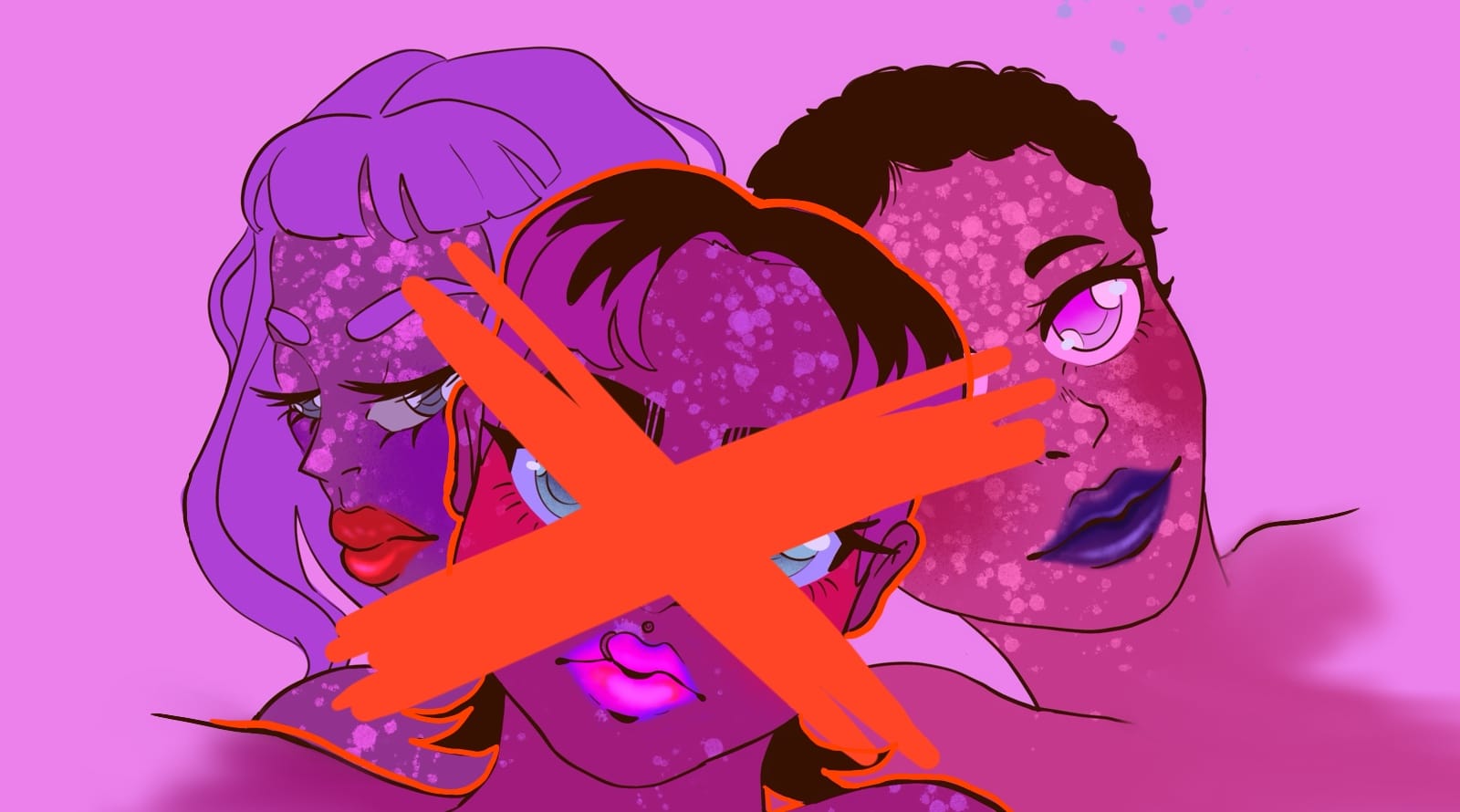
On top of all this, we also deal with hyper-fetishization; men love the concept of lesbianism, as long as it's for their consumption. Their ’girl-on-girl’ fantasies are only acceptable when the acts are centered around their desires; two women together are considered ‘hot’ only if they’re watching or are a part of it. The moment the performance exists outside of their gaze or excludes them entirely, our queerness turns back to being something that is mocked or erased. I take the moments of intimacy I share with other trans people, non-binary people, and women as something super special, so when my experiences turn into something for male absorption, I feel a deep sense of sadness and exploitation, stripping away my softness completely. They don't see us as whole, autonomous people, or care at all about the oppression we face. They see us as props for their satisfaction, and this constant feeling of dehumanization is exhausting.
Relationship Struggles
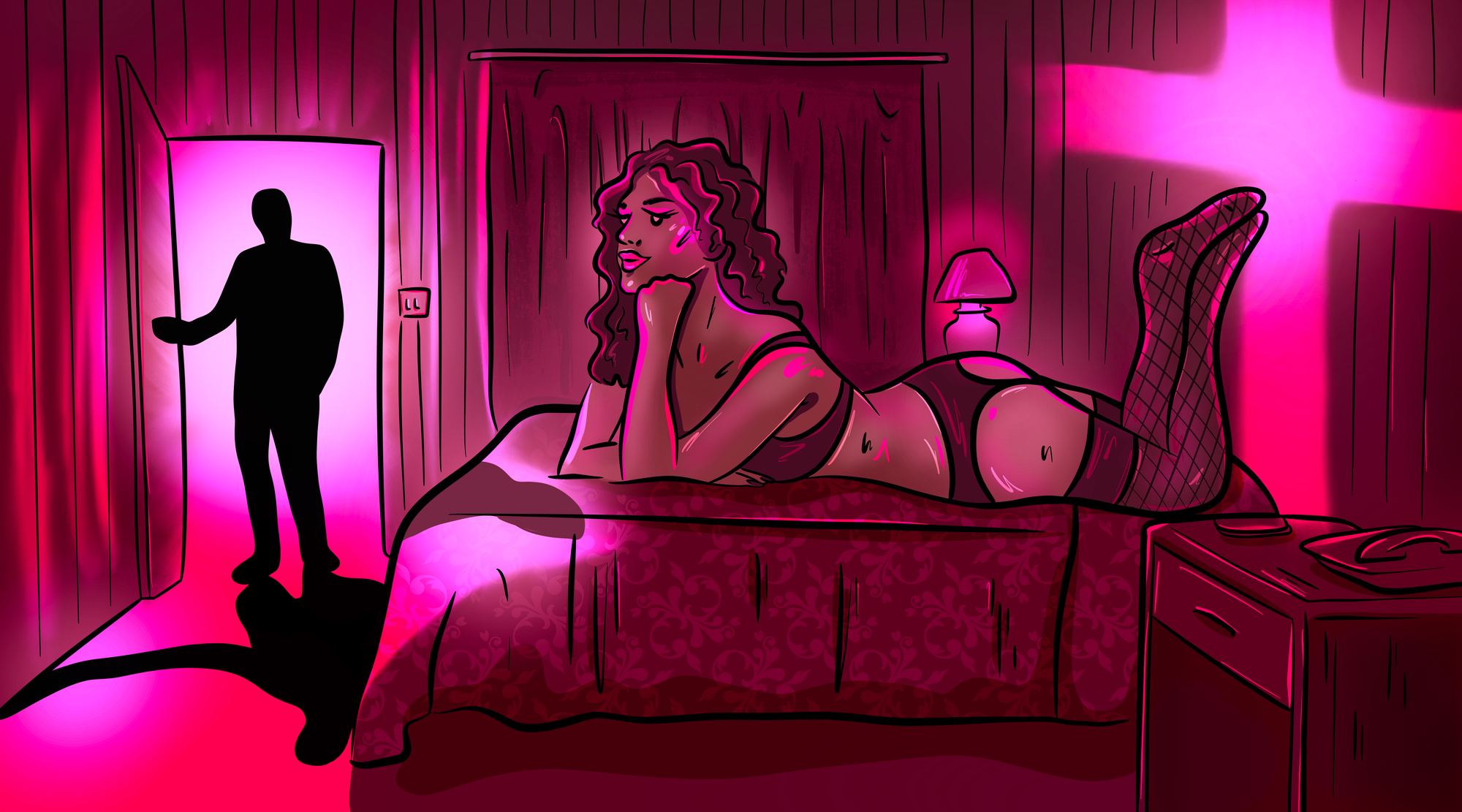
Intimacy for any sex worker (queer or not) can become a fraught territory. When your body is constantly commodified, reclaiming it fully in moments of genuine connection can become difficult. This dynamic has often left me feeling disconnected during intimate encounters, almost like my body becomes ghost-like when I should feel present. In moments where I want to be sexy and safe with my partner(s), sometimes I find it hard to switch off the emotional toll and be 100% vulnerable. It's tough to engage with someone you desire and feel completely comfortable in your body after being with the complete opposite of your attraction (majority cis-het men).
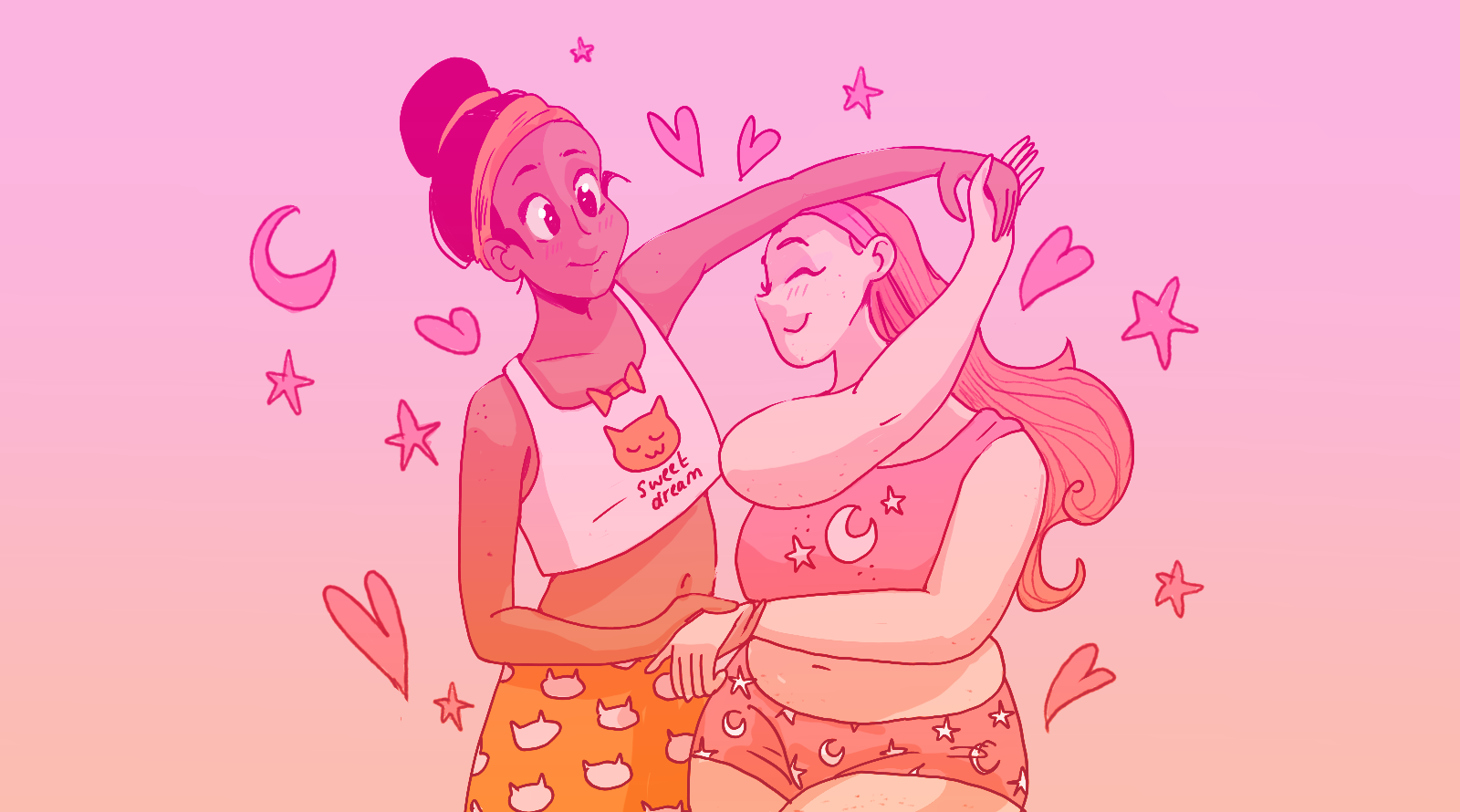
Despite being a lesbian, I faced constant accusations of infidelity from a partner who couldn't separate the professional nature of my work from my personal life. Abuse, fueled by jealousy and misconceptions, is sadly too common in relationships with sex workers, and lesbians make no exceptions. Even though my acts were strictly for money, the distrust my partner felt for me was prominent, creating a toxic environment where every action was scrutinized. Instead of being comforted, I was shamed. Being a lesbian sex worker does not make our relationships easier either. To make things easier for all sex workers, civilians must break down the stigma surrounding our work and create space for acceptance and trust in relationships.
Survival doesn't define sexuality
I find it common for people to ask me how I can be gay if I perform sexual acts with and for men. The answer is simple: a sexual identity isn't defined by what someone does to pay bills, especially in a capitalist system. The harsh reality is that there will be aspects of your work you don't like, but are we letting our jobs define us completely? Working-class people are all victims of a system that prioritizes profit over people. We exchange labor for money, and my labor does not make me any less gay than any other lesbian, yes, even the ones who have never touched a man.
This harmful narrative can perpetuate exclusionary language, such as ‘gold star lesbians’ (lesbians who have never had sex with a man). These types of lesbians are not 'superior' to lesbians who took time to figure out their sexuality or who do sexualized labor for money. Being a lesbian has nothing to do with who I work with or what I do in order to survive—it's about who I love and choose to align myself with. The notion that being a lesbian makes this work easier is rooted in false ideology, not reality. This assumption overlooks the truth and ignores the extra weight queerness adds: the fetishization, erasure, our personal love lives, being doubly marginalized. I’ve learned throughout the crossover of these identities, that this world and the system itself is set up to misunderstand us; however, this work mixed with queerness is a form of resistance, and defining ourselves internally, externally, or however we choose to is how we continue to live in our authenticity.
"If I didn't define myself for myself, I would be crunched into other people's fantasies for me and eaten alive." - Audre Lorde.
Are you a sex worker with a story, opinion, news, or tips to share? We'd love to hear from you!
We started the tryst.link sex worker blog to help amplify those who aren't handed the mic and bring attention to the issues ya'll care about the most. Got a tale to tell? 👇☂️✨