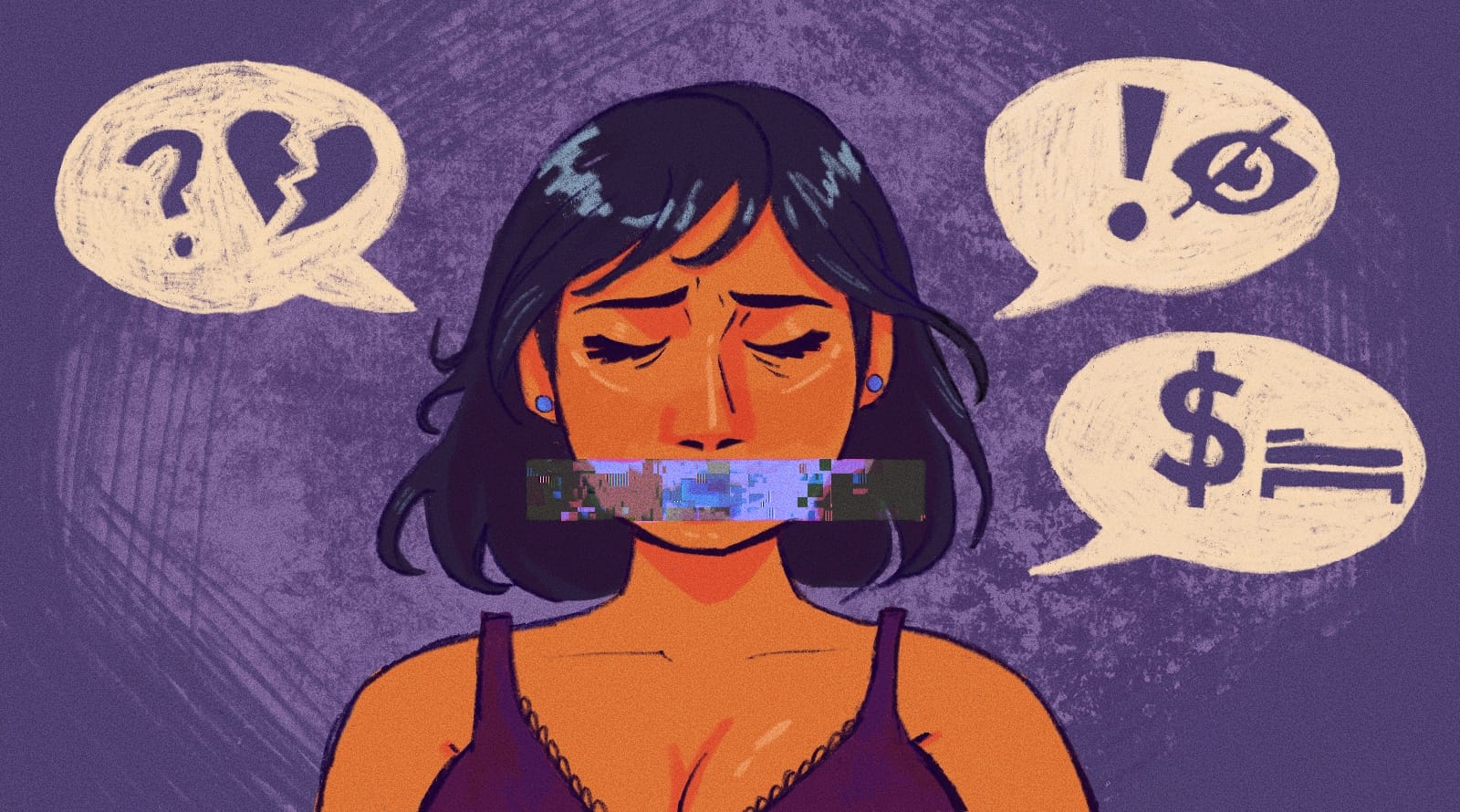

In Nairobi, a woman who wants more doesn’t get curiosity; she gets a label.
The labels are efficient, almost elegant, in their cruelty. They save time. They spare society the inconvenience of nuance. A woman can be sorted, explained, and dismissed in under a minute.
If she is humble, struggling, and aesthetically aligned with suffering—bonus points if she posts Bible verses and blurry photos of her hustle—she is a saint. The kind Nairobi loves to celebrate from a safe distance. Inspirational, but not threatening.
If she is sensual, stylish, and unapologetically money-aware, she is a slut. A moral cautionary tale; a woman whose desire, sexual or financial, is treated as evidence of corruption. And if she is doing too well without a visible male benefactor? If her lifestyle does not map neatly onto marriage, inheritance, or male sponsorship? Then obviously, she is a scammer. There is no fourth option.
This is not about individual jealousy or gossip culture alone. It’s about how Kenyan respectability politics flatten women’s ambition into moral categories, especially when desire, money, and visibility collide. These labels function less as descriptions and more as control mechanisms. They are “social leashes”—quietly reminding women how far they are allowed to go before they become suspect.
Respectability as a performance
Respectability in Nairobi is not just about behavior; it’s about optics. It demands a specific choreography of humility, gratitude, and delayed gratification. You are allowed to want but not too loudly. To earn but not too quickly. To enjoy but not too visibly.
The saint understands this intuitively. She performs struggle gracefully. Her ambition is palatable because it is framed as endurance, not appetite. She wants stability, not abundance. Survival, not pleasure. Her dreams are modest enough to be morally acceptable.
The slut disrupts this performance. She is too comfortable with wanting. She enjoys beauty, sex, attention, and money without attaching sufficient shame to them. She refuses to pretend that desire is accidental, or that comfort must be earned through visible suffering. Her existence exposes the lie that morality and deprivation are the same thing.
And the scammer? She is the ultimate threat, because she breaks the most sacred rule: she succeeds without explanation. Her money has no respectable narrative: no husband, no tragic backstory, no employer whose logo can be name-dropped to soothe collective anxiety. Her autonomy becomes suspicious precisely because it cannot be easily surveilled.
The gendered suspicion of ease
There is a deep Kenyan discomfort with women who appear to move through life with ease.
Ease is read as theft, manipulation, or moral shortcutting. A man who upgrades his lifestyle is assumed to be ambitious, clever, or lucky. A woman who does the same is interrogated like a crime scene. Who is paying? What is she giving in return? When will it end?
This suspicion is not accidental. It is rooted in a patriarchal economy that positions women as dependents; financially, sexually, emotionally. A woman who opts out of this dependency destabilises the entire system. If she does not need a man’s money, approval, or protection, what leverage remains? So society invents one: shame.
Desire as evidence
In Nairobi, a woman’s desire is treated as incriminating evidence. Wanting comfort is framed as greed. Wanting pleasure is framed as moral decay. Wanting autonomy is framed as rebellion. There is a constant demand that women justify their wants in socially acceptable language, self-improvement, family, faith, legacy. Never joy. Never ease. Never because “I want to”.
This is why conversations about soft life provoke so much hostility. The idea that a woman might actively design a life around rest, beauty, and enjoyment, without apology, feels almost obscene. Not because it is harmful, but because it refuses the traditional script of feminine sacrifice.
And yet, something interesting is happening.
Opting out of the triangle
A growing wave of Nairobi women are no longer auditioning for respectability. They are opting out of the saint/slut/scammer triangle entirely. They are erotic entrepreneurs, monetising fantasy, intimacy, and desire through platforms that bypass traditional gatekeepers. They are soft life creatives, building brands around aesthetic pleasure, emotional labor, and curated presence. They are digital workers whose income streams are fluid, decentralised, and intentionally opaque. They are not asking to be understood. They are asking to be paid.
What unsettles critics is not that these women exist, but that they are loud about it. Strategic. Unashamed. They name their labor, beauty, attention, emotional intelligence, and eroticism as work. And in doing so, they expose how much unpaid labor women have always been expected to give away for free.
Visibility as power
Visibility has become a battleground. For decades, women were told to keep their wins quiet. To downplay their success. To shrink their joy so it wouldn’t offend. But digital platforms have changed the terms of engagement. Visibility is now currency. Attention is monetisable. Presence itself can be leveraged. Nairobi women are learning this quickly.
Platforms like Instagram, TikTok, OnlyFans, Patreon, Substack allow women to narrate their own lives, set their own prices, and cultivate audiences without institutional permission. They blur the lines between work and play, intimacy and commerce, authenticity and performance. This blurring makes people uncomfortable because it resists categorisation. Is she a businesswoman or a flirt? A creative or a hustler? A victim or a villain? The answer, often, is “yes”.
Humour as resistance
What makes this shift particularly Kenyan is the humour. Women are not just resisting respectability politics; they are mocking them. Through captions, memes, inside jokes, and exaggerated performances, they expose how absurd the moral panic really is. The side-eye becomes a weapon. Laughter becomes defiance.
Humour allows women to say what cannot be said directly: that the rules were rigged from the start. That the moral high ground is often just envy in disguise. That the obsession with “how she got her money” is rarely about ethics and almost always about control.
The cost of autonomy
None of this is romantic. Opting out comes with consequences. Women who refuse the labels are often isolated, over-scrutinised, and denied empathy. Their successes are minimised. Their struggles are dismissed. If they fall, the fall is treated as proof that they deserved it.
There is little room for complexity. A woman cannot be both ambitious and vulnerable, sensual and ethical, strategic and sincere. The labels collapse her into something easier to manage. And yet, more women are choosing this path anyway. Because the alternative, performing virtue for a system that never intended to reward them, is exhausting.
Why comfort still looks like a crime
At its core, this anxiety is about power. A Kenyan woman who wants comfort, pleasure, and autonomy disrupts a cultural economy built on her restraint. Her wanting exposes the lie that women exist primarily to serve, sacrifice, and settle. Her refusal to apologise for ease forces a reckoning with how much suffering has been normalised as feminine virtue.
The question, then, is not why these women are suspicious. It’s why their desires threaten us so much. Perhaps because they reveal that scarcity was never inevitable. That respectability was never neutral. That control often disguises itself as concern.
Beyond the labels
The saint, the slut, and the scammer are not real women. They are projections. Simplifications. Tools.
Real women are messier, more strategic, more contradictory. They want safety and excitement. Stability and thrill. Love and money and rest and recognition. Sometimes all at once. And increasingly, Nairobi women are done pretending otherwise. They are building lives that do not require moral approval to function. They are choosing themselves loudly, imperfectly, and in public. Not because it is easy, but because it is honest.
The labels will probably persist. Systems rarely give up their tools willingly. But they are losing their power. Because a woman who no longer needs to be respectable is very hard to control.
For more from Goddess Mwenesi, see Worship Me Or Be Forgotten and Reparations as a Black Findomme.
Are you a sex worker with a story, opinion, news, or tips to share? We'd love to hear from you!
We started the tryst.link sex worker blog to help amplify those who aren't handed the mic and bring attention to the issues ya'll care about the most. Got a tale to tell? 👇☂️✨