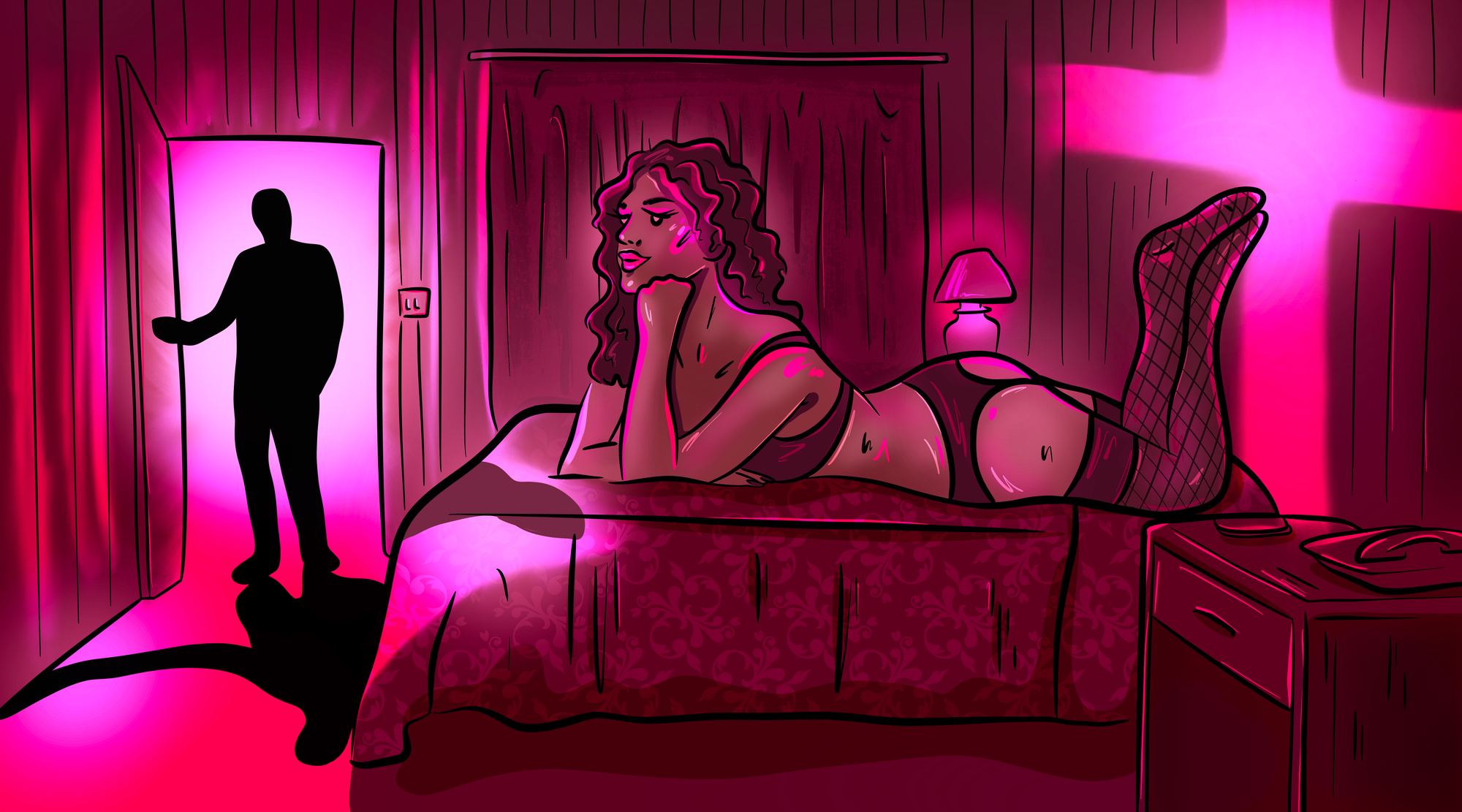

I was always taught to try and understand people. My mother was a stripper: a strong willed, loud mouthed, opinionated woman who fought for what she believed in. She was not a perfect mother, not by any means, but she instilled a very strong sense of empathy and community in me. She taught me that everyone deserves to be heard: the homeless man who lived next to our apartment, the guy selling drugs on the corner, the girl turning tricks down the block. The poor, the underprivileged, the outcasts. The people like us. We all have a story to tell, and we all deserve to tell it. I have carried this belief with me well into adulthood, including my venture into higher education.
Across most universities you will find a narrative of liberation, diversity, and acceptance. This was a very exciting idea to me, to join and study in a space that holds the same values I do. A space where saying the uncomfortable thing, rejecting the status quo, and being disruptive is praised and encouraged.
Very early into my academic career I came to realize that sex work was never talked about, fought for, or centered in any any meaningful way. So, I began to talk about it. A lot. Then I came to realize that universities are experts at performative activism. It’s a selling point, not a practice. Brochures are filled with stock photos of “diverse students”, and mission statements that celebrate equity and representation. But diversity at most universities ends where controversy begins. They want your trauma, not your autonomy. They want to study you, not stand beside you. They can host panels on labor rights, can fund research on marginalized populations, but when that marginalization is embodied by someone sitting in their classroom, someone who turns in essays and pays tuition with OnlyFans income or escorting money, the institution goes silent.
Diversity at most universities ends where controversy begins.
By wearing this mask of progressiveness, they can do things like create what I call “nothing policies”. They can spout acceptance, but never actually change. DEI offices, departments, and workshops often become part of this phenomenon. They have no real leverage: they can’t create new protections; they have to work under the very restrictive, watchful eye of the university and its donors. As someone who worked as the campus LGBT+ Outreach and Resource manager, let me tell you, it’s hell. Trying to have the uncomfortable conversations, actually change policies or create real protection, saying anything that isn’t clearly scrubbed and polished corporate bullshit? Actually impossible.
And don’t even think about uttering a word on sex work, because, as my boss once so eloquently put it, “there is no way to sanitize sex work in a way in which the university will accept.” Or, “no one really cares about that anyway”. Or, my personal favorite, “why would you think anyone would want to hear about that anyway? There's not exactly a large population of people like… that here”. They don’t know what to do with someone who’s both thoughtful and sexual, both intellectual and transactional. The binary comforts them; complexity does not. It’s fucking exhausting.
Part of the problem is that universities are fundamentally risk-averse. Their commitment to social progress lasts only as long as it doesn’t threaten donor relationships, public image, or accreditation. Diversity is fine as long as it photographs well. Queer students can be celebrated during Pride Week; students of color can be honored during cultural festivals.
Sex work, even when it intersects with queerness, poverty, gender, or disability, does not fit within the marketable template of inclusion. It is too visceral, too stigmatized, too inconvenient to package into a PR campaign. So, instead of inclusion, universities offer surveillance. They position themselves as moral gatekeepers, deciding which forms of survival are respectable and which are shameful. A student who works long hours at Starbucks to pay tuition is seen as resilient; a student who engages in cam work or escorts is seen as ‘at risk.’ The difference isn’t in the labor itself but in who gets to define what counts as ‘work.’ They perpetuate classism and whorephobia even as they claim to dismantle both, and for sex workers, this hypocrisy isn’t something you can just roll your eyes at. It's dangerous. It's not just fear of judgment; it’s fear of consequences.
They don’t know what to do with someone who’s both thoughtful and sexual, both intellectual and transactional.
Universities can (and often do) discipline students under vague “morality” or “conduct” clauses. Even if no formal punishment occurs, the social and academic fallout can be devastating. A rumor spreads, and suddenly professors look at you differently, classmates whisper, opportunities dry up. Academia has a long memory and a short tolerance for scandal. Coming out as a sex worker in academia means inviting people to question your credibility, your morality, your intelligence. It means performing normalcy in a space that demands transparency from students but offers none in return. You become hyper-aware of what you say, what you post, what you wear. You start curating your personality around survival. It shapes how you interpret interactions, how safe you feel in mentorship, and forces you to hold back pieces of yourself. And that silence? It isolates us from each other, even as we sit side by side in classrooms built on the illusion of openness. The consequences of this are devastating. Students engaging in sex work often avoid seeking academic accommodations, counseling, or community because they fear judgment or repercussions. They navigate campus life in silence, editing their own stories to stay safe. Programs that claim to be progressive (social work, gender studies, psychology) are often the least safe. These fields may study sex work extensively but still frame it through a lens of pathology, trauma, or rescue. Sitting through lectures where your own livelihood is dissected as a “social problem” is so fucking dehumanizing. You learn to translate your experience into academic terms–“agency,” “marginalized labor,” “post-feminist neoliberal subjectivity”–just to make it palatable enough for a grade.
Moreover, the absence of sex worker advocacy in higher education creates a huge gap in essential knowledge. Sex workers understand labor, consent, performance, power, and survival in ways that most institutions can only theorize about. We have firsthand experience with boundaries, emotional regulation, market dynamics, and human behavior. We understand the commodification of the self not as an abstract concept, but as a lived reality. The classroom loses something deeply valuable when those insights are forced underground. Students who might otherwise contribute openly as researchers, artists, writers, and organizers, instead self-censor or disappear. Research on sex work becomes detached from lived experience, filtered through academic frameworks that flatten complexity. Universities end up reproducing the same stereotypes and hierarchies they claim to critique, because they have erased the people who could correct them.
Creating safety for sex workers in higher education begins with honesty. Universities must stop pretending that sex work doesn’t exist within their walls because sex workers are not an external population, we are here. We are students, teaching assistants, researchers, custodians, and alumni. Our tuition money is as real as anyone else’s, and our right to education should not depend on how we earn it. Real inclusion means structural change, not branding. Universities need explicit anti-discrimination policies that name sex work as a protected identity. Confidential reporting systems must exist that do not automatically treat sex workers as victims or legal liabilities. Professors need training on whorephobia and labor stigma, just as they receive training on racial bias or LGBTQ+ inclusion. Counseling and financial aid departments must recognize that criminalization and stigma create unique barriers for sex workers and that safety sometimes means anonymity.
The absence of sex worker advocacy in higher education creates a huge gap in essential knowledge.
Curriculum reform is equally crucial. Instead of pathologizing sex work, universities should center sex worker voices in academic discourse. Assign readings written by sex workers, not just about them. Invite sex worker activists and scholars as guest speakers. Support student-led initiatives that create peer networks or advocacy groups. Allies within the university (professors, administrators, and students) must challenge the language of “risk” and “rescue” that often defines institutional attitudes toward sex work. They must see sex workers not as subjects of study, but as colleagues and co-creators of knowledge. Inclusion cannot be conditional. Inclusion that excludes sex workers is not inclusion, it’s marketing. They cannot claim to champion diversity while silently deciding which forms of survival are acceptable. When universities fail to do this, they not only perpetuate stigma; they contribute to the intellectual erasure of an entire labor movement.
There is something quietly radical about simply existing in these spaces as a sex worker. To persist, to earn degrees, to teach, to publish is a form of rebellion. It disrupts the sanitized image of academia. Each hidden sex worker in higher ed carries an invisible protest in their body and a refusal to be erased, even if they cannot yet be visible. Yet visibility remains the dream. If higher education truly wants to live up to its ideals, it must learn to practice what it preaches. That means making space not just for the polished, publishable forms of difference, but for the raw, inconvenient, unprofitable ones too. It means recognizing that sex workers are not symbols of moral failure, but experts in survival, intimacy, and self-determination. It means realizing that you cannot teach liberation while still deciding who deserves it.
For more on sex work and academia, see Schrodinger’s Whore; Sex Work and Academia and The Crushing Irony of the SWERF Academic.
Are you a sex worker with a story, opinion, news, or tips to share? We'd love to hear from you!
We started the tryst.link sex worker blog to help amplify those who aren't handed the mic and bring attention to the issues ya'll care about the most. Got a tale to tell? 👇☂️✨